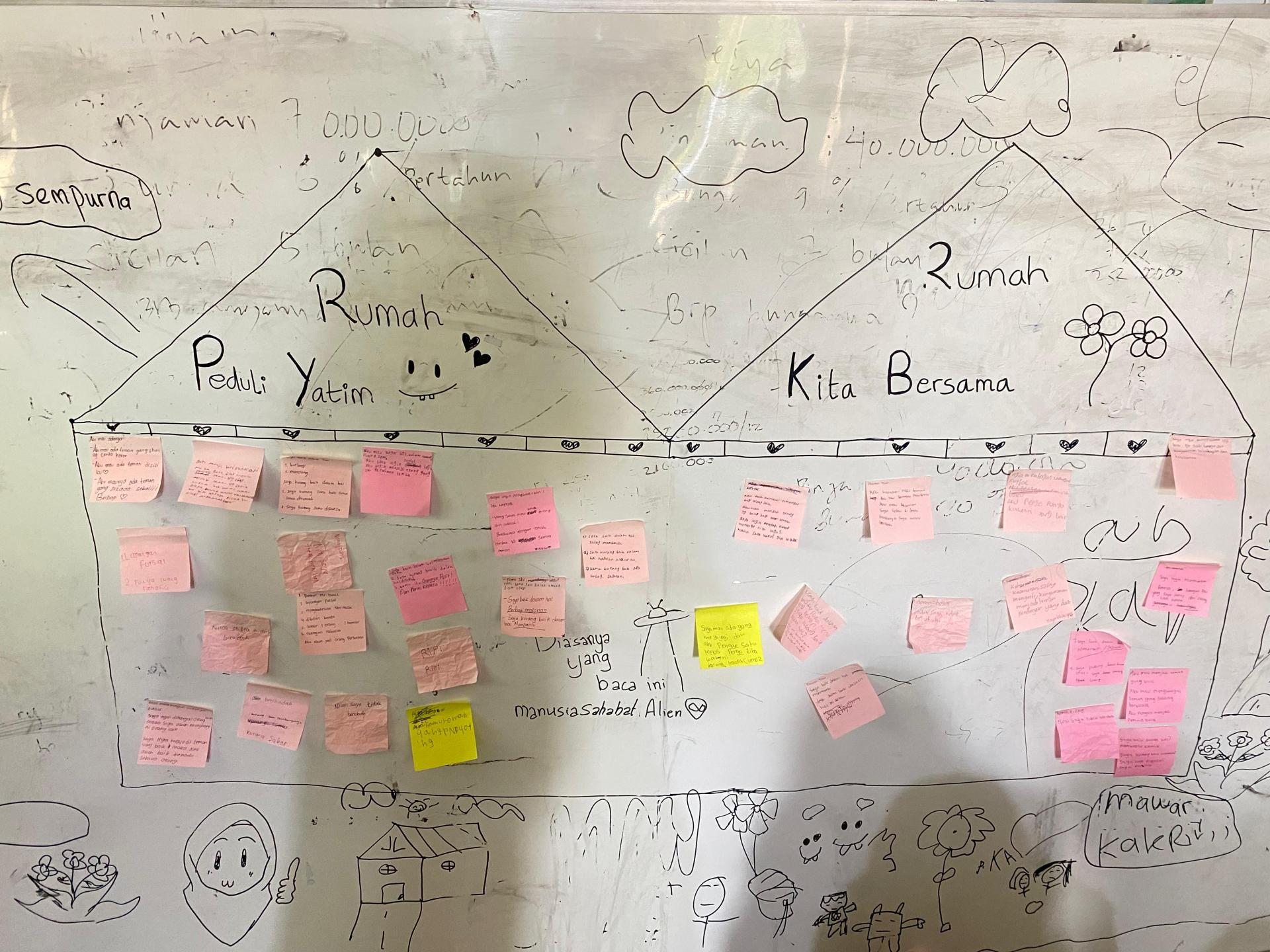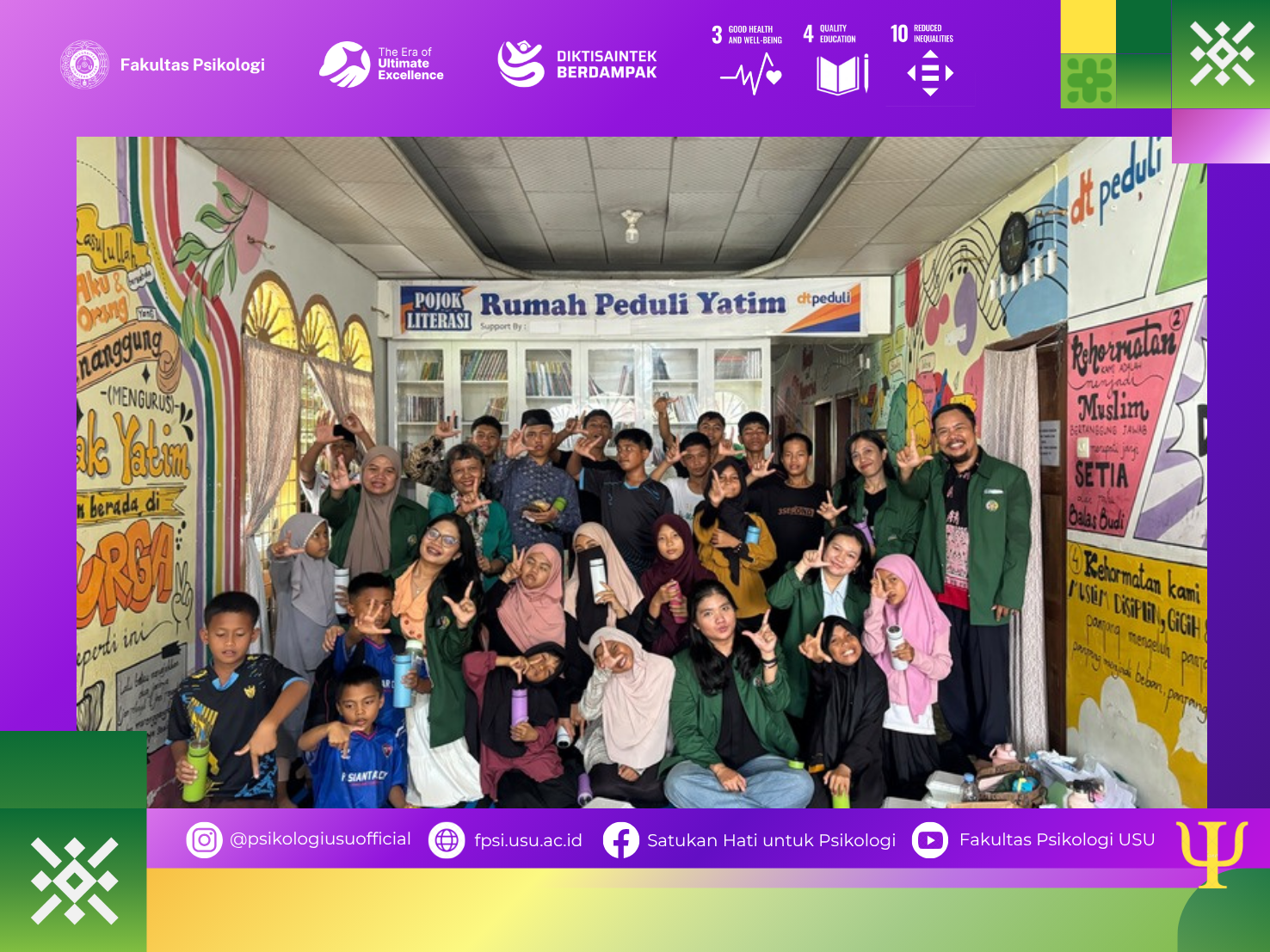
Through this activity, the children were encouraged to understand that their life backgrounds do not determine their self-worth or potential. Every child has unique qualities, strengths, and opportunities to grow. To support this goal, the activity was designed to be interactive through presentations on self-confidence, worksheet exercises, group discussions, educational games, and self-affirmation activities.
These activities provided opportunities for the children to recognize their strengths, express their thoughts and feelings, and develop a more positive view of themselves. Through affirmations such as “I am valuable” and “I have strengths,” the children were encouraged to recognize that they deserve respect and have the potential to achieve a better future. Thus, this activity is expected to serve as an initial step toward building courage, self-acceptance, and confidence in their abilities.
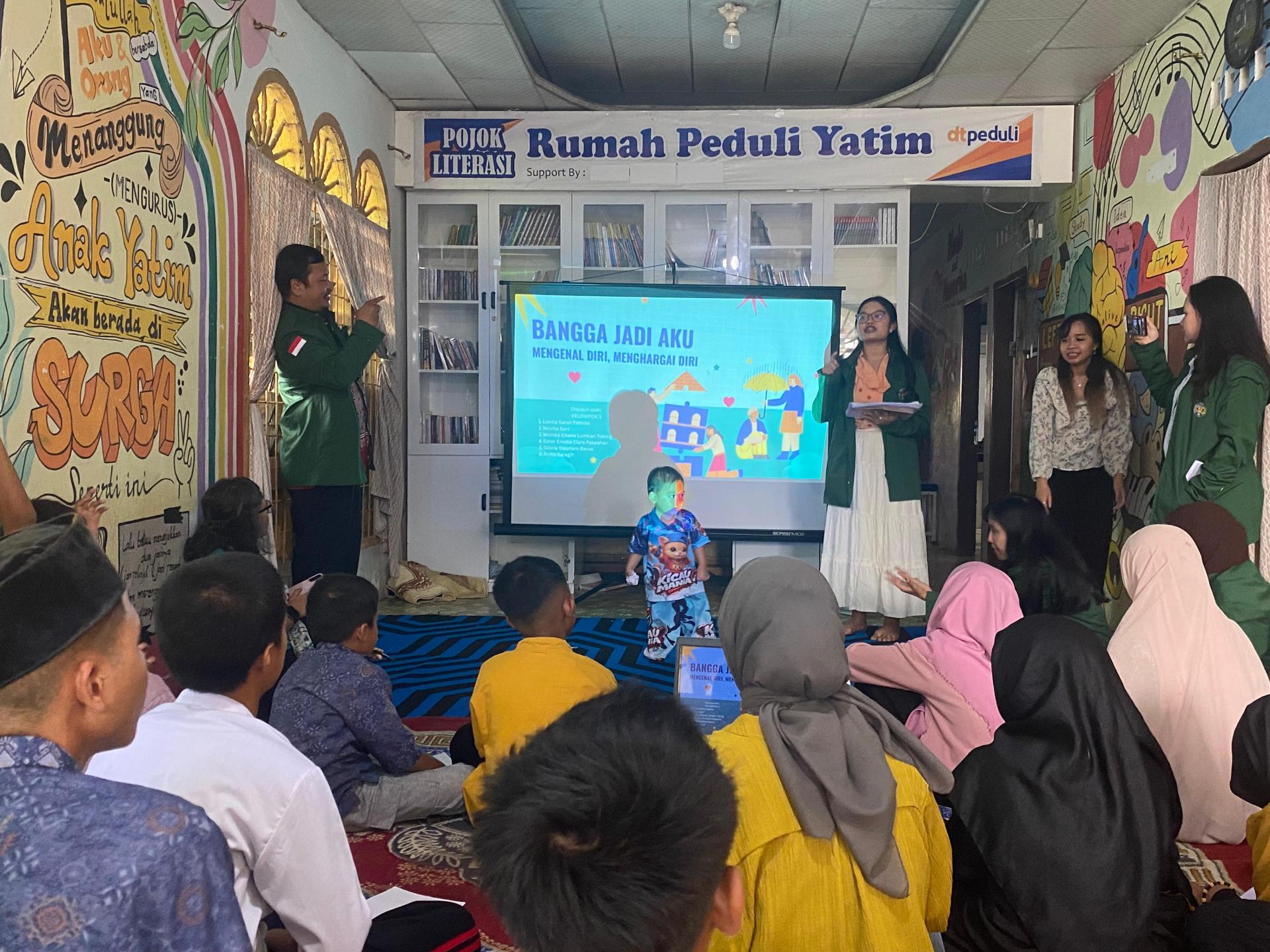
This activity aligns with the Sustainable Development Goals (SDGs), particularly SDG 3: Good Health and Well-being through support for children's psychological well-being; SDG 4: Quality Education through non-formal learning that develops social and emotional skills; and SDG 10: Reduced Inequalities by encouraging equal opportunities for every child to grow and develop without stigma or discrimination based on their life circumstances.
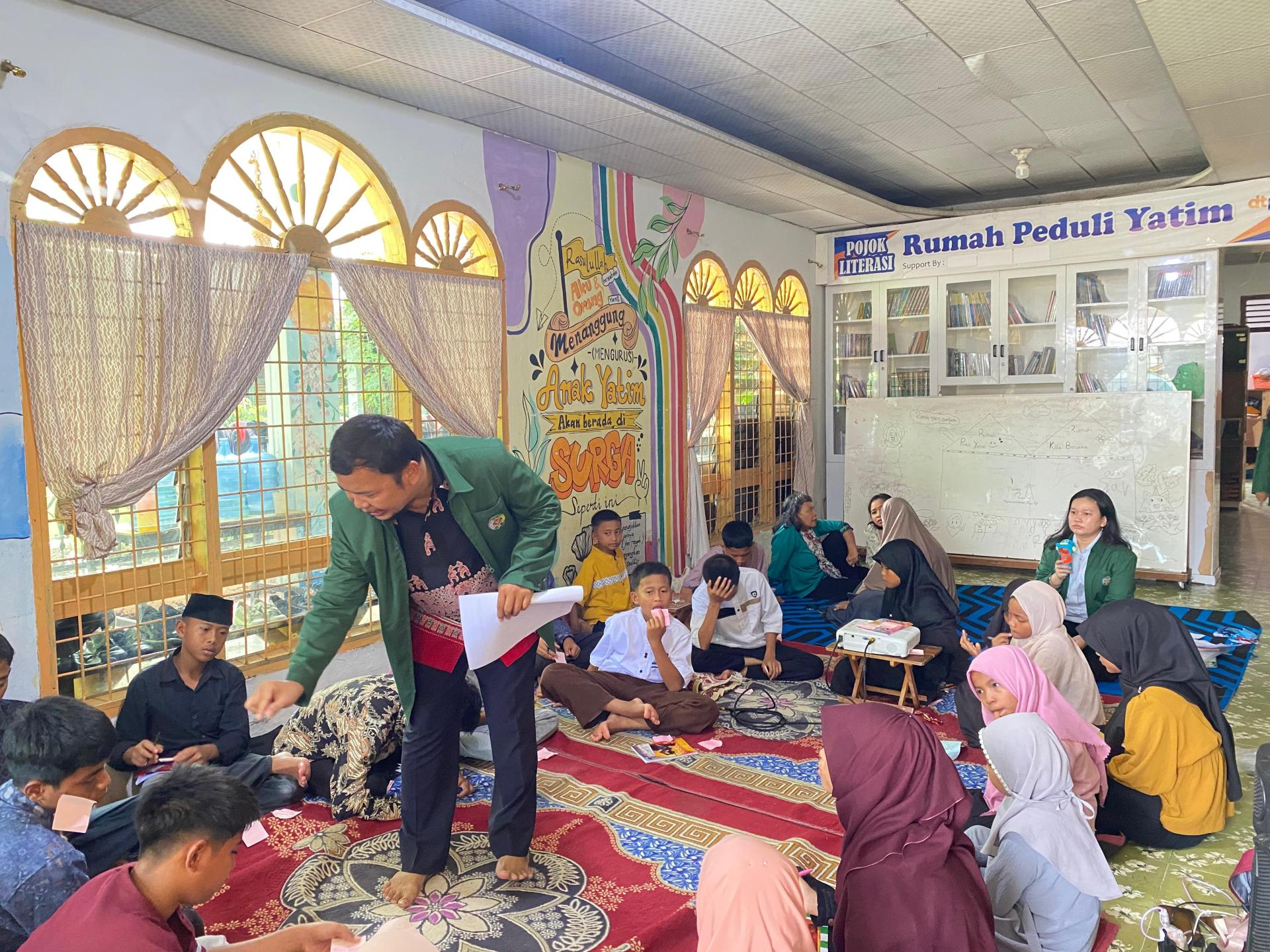
Moving forward, the Faculty of Psychology USU hopes that similar psychoeducation programs can be implemented sustainably through collaboration with orphanage administrators and relevant institutional partners. Through the “Proud to Be Me” activity, the Faculty of Psychology USU reaffirms its commitment to providing tangible benefits to society while supporting children's growth and development so that they become more confident, resilient, and optimistic about the future.